

Why Altamira Matters
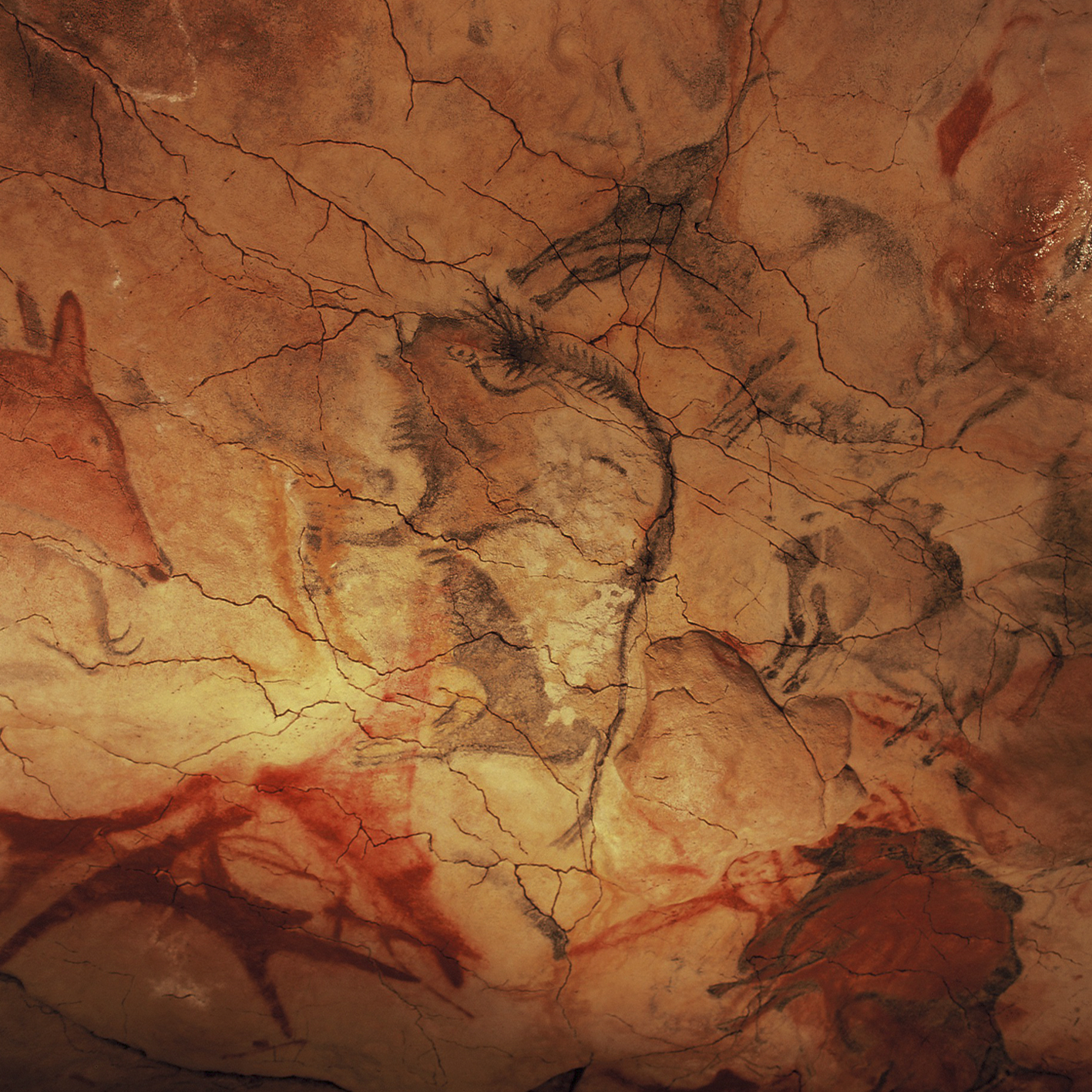
The Cave of Altamira, located near the medieval town of Santillana del Mar in Cantabria, northern Spain, stands as one of the most important archaeological sites in the world. Its polychrome ceiling paintings of bison, deer, horses, and human handprints represent the pinnacle of Upper Paleolithic artistic achievement. When first discovered in 1879, the paintings were so sophisticated that many scholars refused to believe they could have been created by prehistoric humans.
Today, Altamira is recognized as a cornerstone of human cultural heritage. Designated a UNESCO World Heritage Site in 1985, and expanded in 2008 to include 17 additional decorated caves across northern Spain, it continues to reshape our understanding of early human cognition, creativity, and spiritual life.
The Paintings of Altamira
The cave's most celebrated feature is the Great Hall ceiling, sometimes called the "polychrome chamber." Spanning roughly 18 meters in length, the ceiling bears vivid depictions of bison in various postures: standing, galloping, lying down, and turning their heads. The artists used natural rock contours to give the animals a three-dimensional quality, applying mineral pigments such as red ochre, charcoal, and hematite with remarkable skill.
Beyond the bison, the cave contains engravings of deer, horses, and abstract symbols, along with red handprints that may represent some form of personal signature or ritual marking. Radiocarbon dating places the oldest works in the Aurignacian period (approximately 35,000 years ago), with the most elaborate paintings created during the Magdalenian period (around 15,000 to 11,000 years ago).
Discovery and Controversy
The cave was discovered in 1868 by a local hunter named Modesto Cubillas. However, it was not until 1879 that the paintings attracted attention, when amateur archaeologist Marcelino Sanz de Sautuola and his eight-year-old daughter Maria explored the cave. According to the well-known account, it was Maria who first looked up at the ceiling and exclaimed upon seeing the bison figures.
Sanz de Sautuola published his findings in 1880, but the scientific establishment of the time dismissed the paintings as modern forgeries. The debate raged for over two decades until similar discoveries at other European caves vindicated his claims. Tragically, Sanz de Sautuola died in 1888 without seeing his work accepted. The full significance of Altamira was not recognized until the early twentieth century.
The Neocave and Museum
Since 2002, the original cave has been closed to general visitors to prevent further deterioration caused by changes in temperature, humidity, and carbon dioxide levels from human presence. In its place, the Altamira Museum offers a scientifically accurate replica known as the Neocave. Built using detailed laser scanning and expert artistic reproduction, the Neocave faithfully recreates the main chambers, formations, and paintings of the original cave.
The museum also houses extensive exhibits on Paleolithic life, including tools, hunting techniques, and social organization of the people who created the art. Interactive displays allow visitors to understand the artistic techniques used, from pigment preparation to the innovative use of natural rock surfaces.
Museum Hours
May to October: Tuesday to Saturday, 9:30 to 20:00. Sunday and holidays: 9:30 to 15:00. November to April: Tuesday to Saturday, 9:30 to 18:00. Sunday and holidays: 9:30 to 15:00. Closed Mondays, January 1, May 1, and December 24-25 and 31.
Ticket Information
General admission: 3 EUR. Free on Saturday afternoons (from 14:00) and all day Sunday. Reduced rates for students and seniors. Advance booking recommended through the museum's official website.
The UNESCO Cave Art Network
Altamira is part of a wider UNESCO designation that includes 18 caves across Cantabria, Asturias, and the Basque Country. Together, these sites represent the most comprehensive collection of Paleolithic cave art in the world. Notable caves in the network include El Castillo (which contains the oldest known cave art in Europe, dating to over 40,000 years), Tito Bustillo in Asturias, and Ekain in the Basque Country.
The "Franco-Cantabrian" school of prehistoric art, as scholars term it, demonstrates a continuous artistic tradition spanning roughly 25,000 years. This remarkable continuity suggests that artistic expression and cultural transmission were fundamental aspects of human society long before the development of agriculture or writing.
Getting There
The museum is situated about two kilometers southwest of Santillana del Mar, a beautifully preserved medieval town often described as one of the prettiest villages in Spain. From Santander, the regional capital, the drive takes approximately 30 minutes along the A-67 motorway. The nearest airport is Santander (Seve Ballesteros Airport), with connections to major Spanish and European cities.
Santillana del Mar itself is well worth exploring, with its cobblestone streets, Romanesque collegiate church, and traditional architecture offering a perfect complement to the cave experience.
Visitor Tips
- Allow at least two to three hours for the full museum experience, including the Neocave and permanent exhibitions
- Visit on weekday mornings for the quietest experience
- Combine your visit with a walk through Santillana del Mar's historic center
- The museum has an excellent bookshop with publications on prehistoric art and archaeology
- Photography is not permitted inside the Neocave
- Guided tours in English are available; check the museum website for schedules
- For deeper exploration of the region, consider visiting the El Castillo and Las Monedas caves in nearby Puente Viesgo
For comprehensive travel planning in the Cantabria region, the Spain Tourism Board and UNESCO World Heritage listing provide excellent resources.

